
The event that changed the Muslim world
"We want to bring Islam back to its original form in the country and make Saudi society what it is," Crown Prince Mohammed bin Salman of Saudi Arabia told the New York Times in a recent interview. That was before 1979. '
In this regard, the question that came to the minds of many people was what happened in 1979 that changed the shape of Saudi society?
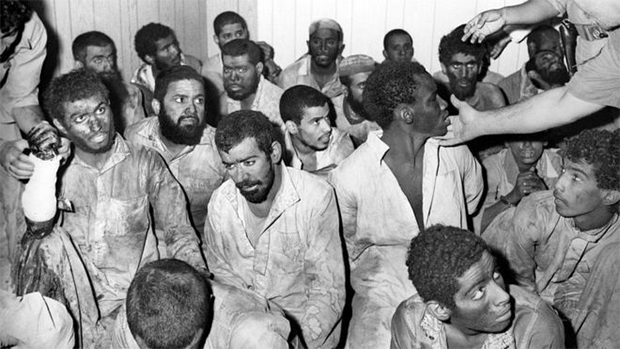
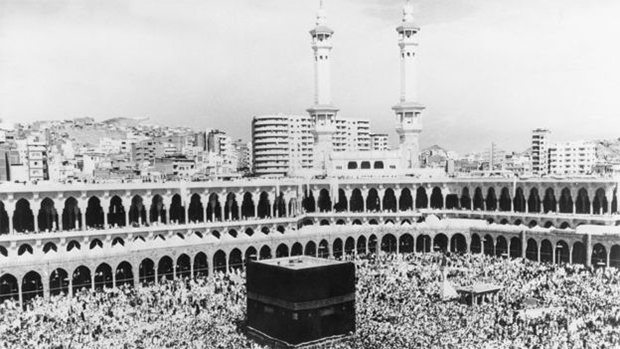
1979 is significant in history and events, but in Saudi Arabia this year is remembered for the attack on the Kaaba in Mecca and the two-week siege that killed thousands and injured nearly one. Hundreds of thousands of people were trapped in the Grand Mosque.
38 years ago, on December 4, the Saudi government, with the help of French commandos, the Pakistani army and the Saudi army, ended the fighting, which began on November 20, when 400 to 500 militants attacked the new Islamic year on Muharram 1, 1400 AH. Khana attacked the Kaaba, surrounded one lakh worshipers in the mosque and took over.
Jehiman ibn Muhammad ibn Saif al-Utaybi, who led the invaders, belonged to a Bedouin tribe in Najd, and was greatly influenced by the teachings of the well-known Saudi cleric, Abdul Aziz ibn Baz.
Abdel Aziz bin Baz opposed and criticized speeches and criticisms of the royalist efforts to modernize Saudi Arabia in the 1940s and 1950s, but the Saudi government later promoted bin Baz to central mufti. However, his criticism did not end.
Jehiman ibn Muhammad ibn Saif al-Utaybi was also impressed by these speeches, after which he joined the Salafi group founded by Abd al-Aziz ibn Baz, with the aim of 'maintaining the original form of Islam' in Saudi Arabia and Saudi Arabia. I wanted to end the growing Westernization, the mixed environment, and the negative effects of television.
Al-Otaibi's extremism escalated over time, after which the Saudi government arrested him and some of his associates in 1978.
Despite his release, al-Atibi did not change his mind, and together with his comrades, he planned to attack the Kaaba at the beginning of the new Islamic century, and on November 20, 1979, during the Fajr prayers, about 500 of his comrades were killed. He entered the Ka'bah and closed the doors and took one lakh worshipers hostage and took control of the mosque.
He called his brother-in-law Muhammad bin Abdullah Al-Qahtani Imam Mahdi. This was the first time in centuries that the Kaaba had been closed to ordinary Muslims.
The Saudi government sent troops to deal with the incident, but due to the sanctity of the Kaaba and poor training, the Saudi military failed to take effective action against the insurgents.
The Saudi government shut down the communications system to avoid embarrassment so that news of the incident would be limited, but they did not succeed.
The US embassy in Islamabad was attacked after the news broke in Pakistan because it was described by Iran as an American-Israeli conspiracy.
After a series of failures, the Saudi government sought help from the French government and the Pakistani military.
Journalist Yaroslav Trophy Move writes in his book based on the incident that French commandos provided emergency training to the Saudi army to eliminate extremists, but because non-Muslims are not allowed in Mecca, Saudi officials help Pakistani troops. On December 4, the uprising was finally brought to an end.
The mosque building was severely damaged in the incident, but the Kaaba remained safe.
According to unofficial figures, more than a thousand people were killed in the incident, including militants, worshipers and soldiers.
More than 60 militants were detained, including Johaman al-Otaibi, who were sentenced to death in January 1980. Al-Qahtani, the brother-in-law of Johaman al-Otaibi, who was called Imam Mahdi, was killed during the operation.
Following the incident, the Saudi government, in consultation with the country's clerics, promised to implement Sharia law, which led to a complete ban on the mixed system in the country and the removal of former King Shah Faisal and then-King Shah Khalid. Moderate policies were abolished.
According to some, the most important event of the year was the revolution in Iran led by Ayatollah Khomeini, which overthrew the Iranian monarchy, and according to some, the Russian invasion of Afghanistan makes this year so important.
According to many observers, Wahhabi Islam has been the talk of Saudi Arabia since the incident, while Russia's invasion of Afghanistan in December 1979 had far-reaching effects on regional politics.