
Do you earn as much as your husband? Why do wives around the world earn less than their husbands? 2021

Do you earn as much as your husband? According to a new global study of husbands and wives' incomes, when asked this question, most of them said no.
Data collected for this study from 45 countries and the last four decades, from 1973 to 2016, for the first time address gender disparities in income.
Professor Hema Swamy Nathan and Professor Deepak Malghan of the Center for Public Policy at the Indian Institute of Management in Bangalore used data from more than 2.8 million households, couples aged 18 to 65, for the study. The data was compiled by the Luxembourg Income Study (LIS), an NGO.
Professor Swami Nathan says, "The family is taken as a unit to test traditional poverty estimates."
"It is generally believed that the income of the earners in a household is combined and then distributed," he said. But often the family is the biggest source of inequality, and that's what we wanted to know and talk about. "
It is a well-known fact that there is gender inequality in the wages of workers in India because women workers are few in number in India and those who are are not paid the same as men.
Professor Swami Nathan and Malghan wanted to assess the global situation through this research. "For example, in the Nordic countries, including Denmark, Finland, Iceland, Norway and Sweden, which are seen as a ray of hope for gender equality in the world, there are women and men," he said. What is the status of salaries, is the distribution of work and wealth in households the same?
Researchers have ranked countries around the world based on domestic work and wealth distribution and inequality between men and women as a whole. According to the results of their research, gender inequality exists in all countries and in rich and poor households.
"According to the latest data from this study, in any country and society in the world where both spouses work, it is not the case that a wife earns more than a husband in a family," says Professor Malghan. Not even in the Nordic countries, where gender equality is highest. According to our research, women everywhere get 50% less share.
Some of the reasons why women earn less are the same globally, as men are culturally considered breadwinners, while women are considered housewives. Many women take a break from work or quit after giving birth. Gender pay gaps and unequal pay (lower pay for women than men for the same work) are a reality in many parts of the world.
And unpaid housework and maintenance is still considered the responsibility of women.
According to a 2018 report by the International Labor Organization, women worldwide perform 76.2% of the total hours of unpaid care, three times more than men. In Asia and the Pacific, the figure rises to 80 percent.
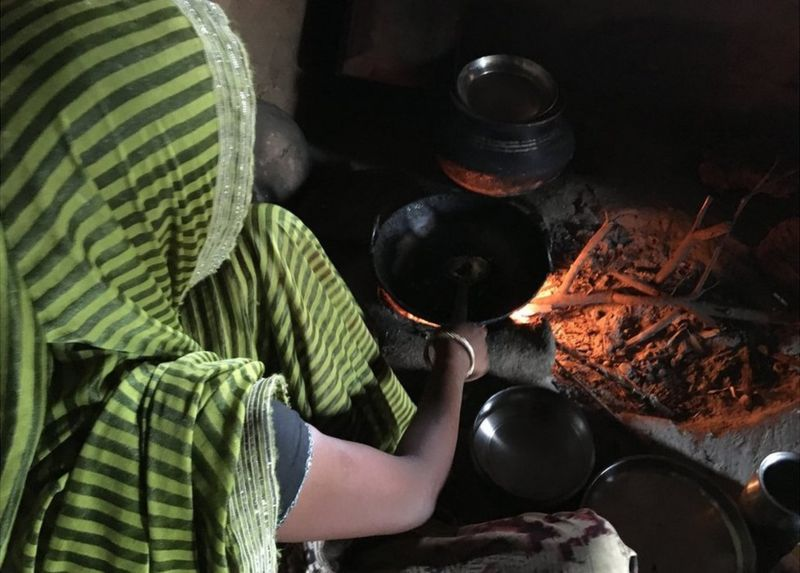
Unpaid home maintenance is a major barrier to working and developing their labor force, the report said.
Researchers say that the effects of a woman's low income far outweigh those of the economy because it affects her gender at home and makes her an inferior figure.
Professor Swami Nathan says, "No one sees the effort and hard work of a wife to build a house while cash is visible to everyone." Therefore, if a wife is earning money and contributing to the household expenses, she is given a special place in the family. It gives him the opportunity to intervene and make decisions in domestic affairs.
"If her salary or income goes up, she gets a more stable and strong position in the family, and sometimes a good income helps her get out of a bad relationship and live her life."
Professor Malghan says that this discrepancy in income also affects long-term economic security, as women have access to savings and wealth accumulation and lower income in old age because pension policies are linked to earnings.
However, there is good news in this report that from 1973 to 2016, the gender income gap has narrowed by 20%.
"In most parts of the world, there has been economic growth and an increase in the number of women in the labor force," says Professor Swami Nathan. In many countries around the world, women-friendly policies have helped bridge this gap. In many countries of the world, there are movements for equal pay for the same work. All of these measures have helped to bridge the gap.
He says that despite the reduction in gender-based income inequality, the gap is still large in the current situation and should be further reduced.
"Governments are not living up to their word and companies are not providing jobs to more women and they are being forced to do housework and maintenance without pay," she said.
So we have to ask whether women's work is being appreciated and respected? Do they have policies regarding family, friends and children? And we also need men who are well raised and help women with household chores.